-
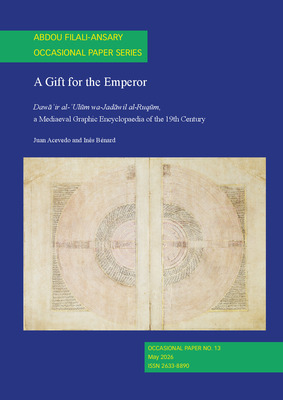
A Gift for the Emperor Dawāʾir al-ʿUlūm wa-Jadāwil al-Ruqūm, a Mediaeval Graphic Encyclopaedia of the 19th Century
Juan Acevedo and Inês Bénard da Costa
The recent discovery of a 19th-century Arabic manuscript in the Gulbenkian Museum, Lisbon, initiated a period of intense collaboration between the Museum and the Faculty of Sciences, University of Lisbon, culminating in the 2023–24 exhibition ‘Power of the Word V: Circles of Knowledge.’ The first part of this article describes the manuscript, while the second part looks at its contents, a striking visual encyclopaedia, mostly from Safavid sources, entitled Tuḥfat al-Khāqān: Dawāʾir al-ʿUlūm wa-Jadāwil al-Ruqūm (A Gift for the Emperor: Circles of Sciences and Tables of Numerals). Its sections range from cosmogony and alphanumeric cosmology to geography, geomancy and the basics of ʿaqīda, all laid out and wrapped in complex circular, stellated patterns, and tables, totalling one hundred and eight diagrams. We examine and compare page samples from a handful of copies found in libraries around the world, and we offer some reflections on its relevance for the history of ideas and for data visualization technology
-
3-5 Years Vroom Tips Based Booklet AKUHDP & AKUIED
Taiba Yar Baig, Hira Ali, Seema Lasi, and Yasmeen Mehboob
- Inspired by vroom
- The Aga Khan University
- AKRSP
- Aga Khan Foundation
-
0-3 Years Vroom Tips Based Booklet AKUHDP & AKUIED
Taiba Yar Baig, Seema Lasi, Yasmeen Mehboob, and Khush Funer
- Inspired by vroom
- The Aga Khan University
- AKRSP
- Aga Khan Foundation
-
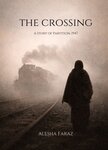
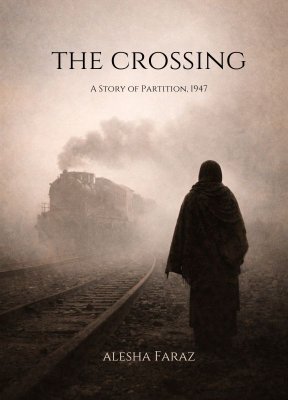
The crossing : A story of partition 1947
Alesha Faraz
The Crossing is a moving book about the India-Pakistan Partition of 1947. It tells the story of the Ansari family, who live a quiet life in Triplicane, Madras, until history changes everything. As tensions rise, their daily life becomes dangerous, and staying home is no longer safe. The family leaves everything behind and joins the migration toward Pakistan, a place that exists more as hope than certainty. This historical book about 1947 shows the fear, confusion, and courage of people during the Partition. On crowded trains and unfamiliar roads, the family faces many hardships, but also finds kindness from strangers. They must make difficult choices to protect their loved ones. A powerful historical book on the 1947 Partition and an unforgettable India-Pakistan Partition story. The book is based on true events, that tells the story of survival, bravery, and hope. For readers who search for migration history and real stories from that time, The Crossing is a must-read book on the 1947 Partition it brings the events of 1947 to life, highlighting both the brutality and the acts of kindness that shaped this critical moment in history
-
Supporting systematic reviews and other evidence synthesis methodologies: A librarian’s toolkit
Alison Kinengyere, Nasra Gathoni, and Adrine Nyamwiza
Evidence synthesis is a collective term for types of secondary literature research that brings together all relevant information on a well-formulated, well-focused research question using a consistent, reproducible methodology. This process includes scoping reviews, systematic reviews, umbrella reviews, meta-analyses, among others, aimed at summarizing evidence on a particular topic.
Librarians play a vital role in the evidence synthesis process towards ensuring the reproducibility and transparency of the research process, hence they should be involved in the process from the start to the end of the evidence synthesis review process/project. In fact, various guidelines recommend that evidence synthesis projects such as systematic reviews should have a librarian or a search expert to develop a replicable search strategy, conduct a search in different databases, document and manage the data, as well as write the methods section of identification of studies for inclusion. The role of the librarian goes beyond search strategy development and execution to include the organization and management of references through use of specialized software such as, Endnote, Zotero and software such as Covidence which helps in streamlining the de-duplication and screening process. Librarians can also provide guidance in developing the research question, which serves as the foundation for evidence synthesis, influencing the search strategy, study selection criteria, data extraction, and synthesis of results, thus guiding many aspects of the evidence synthesis process.
This toolkit therefore provides a comprehensive guide for librarians navigating the complex landscape of evidence synthesis. Through detailed explanations, practical examples, and valuable resources, this book equips librarians with the necessary information, tips and tools to support researchers in conducting evidence synthesis methodologies effectively, that is, in a reproducible and transparent manner.
-
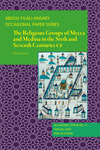
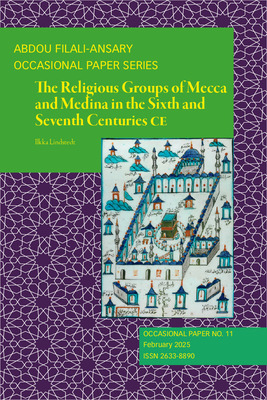
The Religious Groups of Mecca and Medina in the Sixth and Seventh Centuries ce
Ilkka Linstedt
Ancient and modern urban centres have been important loci for encounters between individuals of different identities. In this article, I present Mecca and Medina as multi-religious towns in the pre-Islamic and early Islamic periods of the sixth and seventh centuries ce. Mecca was a very small town, but the Kaaba shrine there served as a regional pilgrimage site that drew people from different faith communities. Medina was a larger settlement with a significant Jewish population. Jews, Christians and others (‘pagans’) lived in both towns. Some of these ‘others’ had also adopted some of the basic ideas of monotheism, although they had not actually converted either to Judaism or Christianity. The sources used in the article are, in particular, inscriptions, the Quran and Arabic poetry. Recent research based on these sources has required a reassessment of earlier scholarly reconstructions of Mecca, Medina and the Arabian Peninsula. According to the conventional narrative, between 610 and 632 ce, proselytisation by the Prophet Muhammad led to the rapid spread of Islam in these urban centres and the expulsion or forced conversion of non-Muslims. However, based on the new evidence provided by the inscriptions and a reexamination of relevant passages in the literature of the period, this no longer seems to be true.
-
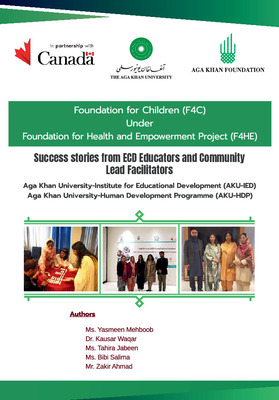
Success stories from ECD educators and community lead facilitators
Yasmeen Mehboob, Kausar Waqar, Tahira Jabeen, Bibi Salima, and Zakir Ahmad
These stories are intended to inspire learning and reflection. As each context is different, the approaches and outcomes described may not apply in the same way elsewhere. Readers are encouraged to thoughtfully adapt these insights to their own settings.
-
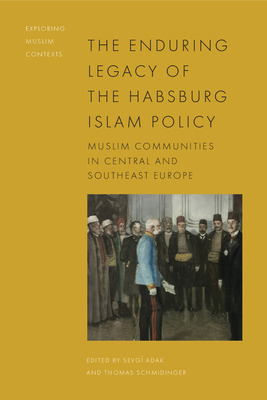
The Enduring Legacy of the Habsburg Islam Policy: Muslim Communities in Central and Southeast Europe
Sevgi Adak and Thomas Schmidinger
Examines contemporary legal and political structures governing Muslim communities in Central and Southeast Europe.
When Otto Habsburg – son of the last emperor of the Austria-Hungarian Empire Karl I – died in 2011, among those who prayed at the funeral was Mustafa Efendi Cerić, the Reis-ul-ulema of Bosnia and Herzegovina – the highest Islamic office in the country. This was to honour the long-lasting relationship between the bygone empire of the Catholic Habsburgs with Bosnian Muslims. The cornerstone of this relationship was the 1912 Islam Act (Islamgesetz) of the Habsburgs, which granted Islam legal recognition and incorporated it into the imperial system. This book explores the legacy of this Act and the ways in which it continues to impact the legal frameworks and political structures governing Islam and Muslim communities in the successor states of Austria-Hungary.
• Explores the cultural and political dynamics that emerged in Central Europe as the home of centuries-old Muslim communities as well as of recent Muslim immigrants
• Maps in detail the diverse trajectories followed by the successor states to the Habsburg Empire with regards to the governance of Islam and Muslim communities
-
The Enduring Legacy of the Habsburg Islam Policy: Muslim Communities in Central and Southeast Europe (OPEN ACCESS)
Sevgi Adak and Thomas Schmidinger
When Otto Habsburg, son of the last emperor of the Austria-Hungarian Empire Karl I, died in 2011, among those who prayed at the funeral in Vienna’s Stephansdom was Mustafa Efendi Cerić, the Reis ul-ulema of Bosnia and Herzegovina. This was to honour the long-lasting relationship between the bygone empire of the Catholic Habsburgs with European Muslims. The cornerstone of this association was the 1912 Islam Act (Islamgesetz) of the Habsburgs, which made Austria-Hungary the first Catholic European state to confer official status to Islam. This book explores the legacy of this act and the ways in which it continues to impact the legal frameworks and political structures governing Islam and Muslim communities in the successor states of Austria-Hungary. It discusses the unique coexistence in Central Europe of centuries-old, ‘indigenous’ European Muslims with recently settled Muslim immigrants, and the trajectory of their interactions with the state. This volume is therefore not only crucial to the debate about European Islam but also to the question of the legal and political framework of Islamic religious communities in a secular Europe.
-
Educational games for Science learning: A teacher`s toolkit for board and card games to support active science learning
Kiran Qasim Ali, Wadhwani Nimarta, and Ruby Bano
This booklet aims to restore science education to its roots in inquiry and exploration. By incorporating play into science teaching, it seeks to rekindle the interest and engagement that conventional methods frequently diminish. Play is not a mere break from learning; it involves experimentation, decision- making, and discovery - processes that are essential both to childhood and to understanding science.
The games presented here connect curriculum goals with interactive, purposeful activities. They provide teachers with structured yet flexible tools to promote active learning, deepen conceptual understanding, and foster student participation. Each game reflects the realities of local classrooms while offering opportunities for adaptation and creativity.
We invite teachers to consider science not as a fixed set of facts to transmit, but as an evolving field to explore. These games serve as initial models that can be adapted, expanded, or serve as inspiration for new designs. Our purpose is not to present definitive solutions, but to encourage thoughtful innovation in teaching practice.
Above all, this booklet affirms a simple principle: science learning can be enjoyable, meaningful, and profoundly human when it is grounded in play. -
7th Educational research day: Building a culture of inquiry: Promoting research in HPE
Department of Educational Development (DED)
-
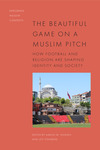
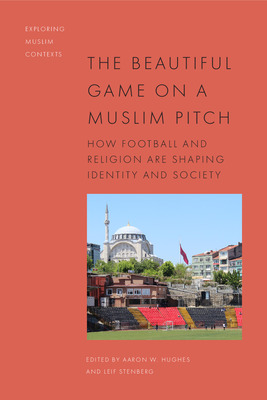
The Beautiful Game on a Muslim Pitch: How Football and Religion are Shaping Identity and Society
Aaron W. Hughes and Leif Stenberg
Examines how football and religion act together to shape both identity and society in Muslim contexts.
This book showcases how football and religion are becoming increasingly interlinked in Muslim contexts in order to interact with and influence both identity and society. The first part of the volume is devoted to issues of identity, showing how football aids in its construction, maintenance and subversion. The second part reveals the deep-rooted connections between football and political and religious establishments by demonstrating how these organisations frequently use the game to disseminate or propagate their larger messages.
Altogether, the contributors reveal how football has increasingly become a site for confrontations and negotiations over different understandings of religion – as a racial category, as gendered power and as it is invested in issues of state politics.
-

Introduction to early child development (ECD) through an integrated approach for education: Training manual for ECD educators foundation for children under the foundations for health and empowerment project
Yasmeen Mehboob, Kausar Waqar, Almina Pardhan, Abida Begum, Abdul Wali, Bibi Salima, Zakir Ahmad, Tahira Jabeen, Mehnaz Gul, Salima Rahim, Ayesha Zahid Khan, Seema Lasi, Yasmeen Muhammad, Salma Ali, Nazeem Salahuddin, Fatima Syed, and Zehra Adnan
-
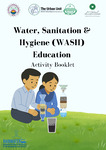
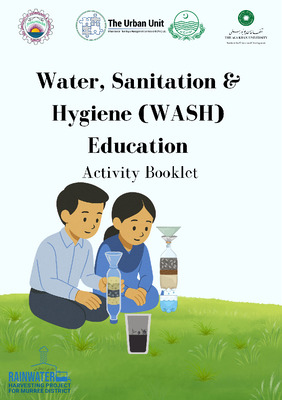
Water, sanitation & hygiene (WASH) education: Activity booklet
Noor Ul Ain and Fozia Parveen
This booklet has been designed as both of informative and interactive resource. it offers practical knowledge about clean water access, safe sanitation, and hygiene practices, along with hands on activities that can be used in classrooms, community meetings, or family discussions. Whether, you are a teacher, student, health worker, or community leader, this booklet aims to empowers you with the tools and knowledge to become a WASH ambassador in your home and neighborhood.
We believe that real change begins with education and collective actions. By creating awareness and encouraging simple, everyday practices, we hope this resource contributes to a cleaner, healthier, and more resilient Murree. -
Environmental and climate change dictionary: Part II
Fozia Parveen
When we published our first environment and climate change dictionary in 2023 at IED (https://ecommons.aku.edu/books/117/), I was surprised by the response we received. Many people reached out to us to tell us how they hear these terms in their workplaces and how our dictionary helps them understand the words better. I wanted to make sure that we continue to add words to the dictionary in order to increase the understanding of others but also our own understanding of many terms we hear on a day-to-day basis. This year with the participants of “Introduction to Climate Change” course at FAS we continued with our dictionary and have added 105 more words to the list of already existing 130 words. We hope that we will continue to co-create such resources for broader community education in the future as well. This year I asked each participant to add 3–5 words which were not to be a repetition of the words already given in our first edition. I reviewed the words twice and students changed the definitions accordingly. After the final review they had to add these words to our Canva page. Later in summer 2025, two FAS interns Aiman Gohar and Alefiya Najam with the help of Yamna Sarwar and M. Wasiq Imran (Teach for Pakistan) interns finalized the Canva version and edited the words further. I reviewed the words one last time before finalizing the book. The participants of Introduction to Climate Change who have contributed to this book include (as they appear in the document) Kamran Abid Khan, Ruyab Jahan, Syed Ali Arsalan, Maheen Azar, Syeda Shamael Riaz, Urooj Nisar, Sheeza Fakhruddin, Sadia Khuwaja, Natasha Ali, Abdus Salam, Shahrayar Morani, Faisal Nabi, Hania Shoaib, Faiza Zafar, Anisa Khan, Syed Samsam Ali, Arjumand Mir, Sana Hameed, Imran Uddin, Moeen Akhtar, Nadia Afsheen, Tahira Nargis, Nizar Alam, Alisha Rashid Majeed, Muhib Afzal, and Najeeb ur Rehman. Please note that some student input is missing as they did not complete the final step of the publication. I hope this work encourages students to contribute more in the future and helps expand our collective knowledge. We warmly invite everyone to use this dictionary with open hearts. Thank you for supporting our mission to advance climate change education.
-
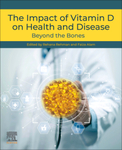
The Impact of vitamin D on health and disease beyond the bones
Rehana Rehman and Faiza Alam
The Impact of Vitamin D on Health and Disease: Beyond the Bones is a complete resource which consolidates recent advances in basic sciences related to Vitamin D, providing a synthesized and up-to-date overview of molecular mechanisms, genetics, epigenetics, and microbiome interactions. The book enhances the understanding of not only the clinical implications of Vitamin D but also provides practical guidance for optimizing patient care in diverse health contexts to improve decision making, personalize patient care and preventive health measures. It is a reader-friendly guide that recognizes Vitamin D and its role in reproductive physiology, bridging the gap between research and clinical applications, offering insights into the practical implications of Vitamin D deficiency on metabolic conditions and fertility outcomes. This is a practical guide to provide a roadmap for scientists to contribute to the evolving field of Vitamin D research to inform and inspire further research studies.
-
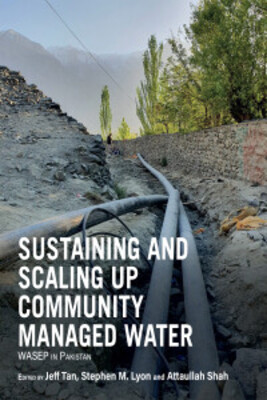
Sustaining and scaling up community managed water: WASEP in Pakistan
Jeff Tan, Stephen M. Lyon, and Attaullah Shah
Community-based water management (CBWM) remains the leading model for implementing and sustaining rural water supply services in low- and middle-income countries despite the lack of sustainability. Moreover, measures centred on providing external support to communities directly and through a wider policy and institutional framework have not improved sustainability. This book examines the key features, performance and limitations of the CBWM model through the case study of the Water and Sanitation Extension Programme (WASEP), a successful community-managed scheme that has delivered clean piped drinking water to over 450 mainly rural settlements in Gilgit-Baltistan, Northern Pakistan.
This case study draws on the findings of a 2019–2022 research project to assess the sustainability of WASEP and its scalability to urban centres funded by the British Academy’s Urban Infrastructures of Well-Being Programme. The research was undertaken by an inter-disciplinary team of UK- and Pakistan-based researchers from the social, engineering, and environmental sciences, along with development practitioners. Both quantitative and qualitative data were obtained through a review of WASEP schemes, a large-scale household survey, interviews, focus group discussions, and an engineering audit, based on a random sample of WASEP schemes and control sites. The chapters examine different aspects of the CBWM model and WASEP and illustrate how community participation and engineering best practices can deliver and sustain clean drinking water up to a point, and the constraints of the CBWM model on long-term sustainability that is relevant to practitioners, communities, governments and donors. -
History of HIV and AIDS in Kenya: Evolution and Contemporary Issues
Maureen Akolo, Abednego Ongeso, Horatius Musembi, Too Wesley, and Dunstan Achwoka
Kenya is at the cusp of attaining HIV epidemic control. With a four-decade old epidemic, that at its height ravaged the country with devastating effects at all levels, the foreseeable end is indeed a momentous feat. Yet, as we forge into the future, it would be remiss of us to fail to honor the work and lives of all who in some way contributed to the gains that we see today.
The epidemic now calls for a new way of thinking. The challenge is different; and that is to end AIDS as a public health threat sustainably. Written by five authors who served as front line health workers during the height of the HIV epidemic and continue to be involved in the response, this book will appeal to many a reader. Policy makers, educationalists, students, scientists, anthropologists, historians, faith and lay communities will all resonate with the book. By providing a historical chronology of events in Kenya's HIV response, myths and misconceptions, scientific and programmatic advances, the authors provide useful insights into the past, contemporary issues and provide a sneak preview to what the future holds. -
5E instructional model: A constructivist approach to teaching & learning
Munira Amirali, Javed Ahmad, Shella Asad, Sadam Hussain, Syed Sardar Hussain, Tahira Jabeen, Tajun Nisa, and Wahid Murad
I taught ‘Curriculum Teaching and Learning’ as one of the master-level courses that enables course participants to broaden their understanding of curriculum models, teaching, learning and assessment approaches. The assignment required participants to choose a topic in their subject area, review relevant literature, and identify challenges faced by teachers and students during teaching and learning that topic.
In addition, course participants were asked to list misconceptions students possess regarding the relevant topics and explore possible solutions and recommendations to address the identified challenges and misconceptions. Thus, the course participants developed learning resources (lesson plans) using the 5E model (Engage, Explore, Explain, Extend or Elaborate, and Evaluate) based on constructivist learning theory to implement the lessons in real classroom settings.
This teacher manual is one of the Curriculum, Teaching and Learning Course Outcomes. It is a valuable resource for subject teachers and educators, offering research-based information on teaching and learning of the selected topics, along with detailed lesson plans for classroom implementation.
This teacher manual includes lesson plans submitted by Javed Ahmad, Sadam Hussain, Sardar Hussain, Shella Asad, Tahira Jabeen, Tajun Nisa, Wahid Murad. I hope that you will find this manual helpful!
First of all I would like to acknowledge Curriculum, Teaching and Learning course participants for developing the lessons following 5E model.
I express my gratitude to Ms Sania Iqbal Siddiqui (Specialist, Aga Khan University Examination Board) for her invaluable editorial insights and meticulous attention to detail that have significantly enhanced the quality of this document.
Finally, I would like to appreciate Ms Sara Faizal for her exceptional efforts in designing and compiling the document ,and ensuring an insightful reading experience for our audience.
You will also find a brief introduction to the 5E model of lesson planning in this document. Following that, you will find the students’ work, which includes a brief literature review on their selected topic, as well as lesson plans for English, Mathematics, Science, and Social Studies. Each lesson plan concludes with activities and references. -
Mashru' Istiqlal Misr 1883: min awraq Muhammad Abdu (d 1905) al-Majhulah= مشروع استقلال مصر 1883 من أوراق محمد عبده المجهولة
Walid Ghali and Emad Abu Ghazy
Printing is not supported at the primary Gallery Thumbnail page. Please first navigate to a specific Image before printing.